Imagine this: the universe is playing a cosmic game of hide-and-seek with itself—and you might be the only thing that forces it to pick a spot and show up.
At the heart of quantum physics lies a scandal most textbooks politely gloss over. Reality doesn’t have fixed properties until something looks at it. Particles don’t just have unknown positions—they exist in a shimmering cloud of all possible positions at once. This is superposition, and the math (the wave function) describing it is so accurate it powers your phone, lasers, MRIs, even GPS.
Yet here’s the bombshell: when you actually measure the particle—bam!—the wave function collapses. One outcome becomes real; every other possibility vanishes. Poof. Quantum mechanics tells us what happens with insane precision… but has zero clue why or how the collapse occurs.
This is the infamous measurement problem, and it shatters the comfy classical world where rulers just reveal length and thermometers just reveal heat. In the quantum realm, measurement doesn’t discover reality—it creates it.
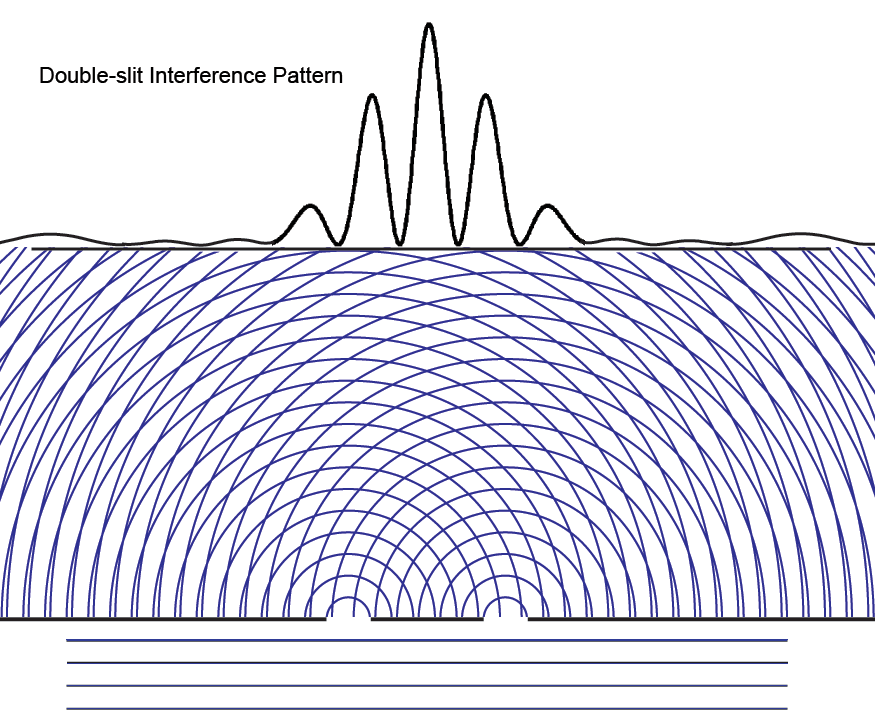
Early physicists dodged the weirdness with the Copenhagen interpretation: “Don’t ask what the particle really is before you look. That question is meaningless.” Fine. The predictions worked. But then someone asked the killer follow-up: What exactly counts as “looking”?John von Neumann traced the measurement chain: particle → detector → electronics → screen → your eye → your brain. Every step can be treated as quantum. The whole chain stays in superposition… unless something outside physics steps in. Von Neumann’s unsettling verdict? That “something” is conscious awareness—the moment you feel the result.

Eugene Wigner pushed it further with his famous friend-in-a-lab paradox. Your friend measures a quantum event inside a sealed room and sees, say, “spin up.” From outside, you must describe the entire lab (friend included) as being in superposition: friend-sees-up AND friend-sees-down. Only when you open the door and ask does reality snap into one version—for you. So whose consciousness triggered the collapse? Your friend’s… or yours? Both answers are mind-bending. Reality becomes observer-dependent in a chained, almost recursive way. Now layer on the biggest mystery in all of science: the hard problem of consciousness. We can map every neuron firing, every network buzzing—but why does any of it feel like something? Why is there an “inside” view at all? Computers crush chess, write poetry, recognize faces—yet show zero evidence of inner experience. If classical computation can’t produce qualia (the redness of red, the sting of pain), maybe consciousness isn’t classical. Enter Roger Penrose and Stuart Hameroff with their audacious Orch-OR theory (Orchestrated Objective Reduction).Penrose, using Gödel’s incompleteness theorems, argued human insight transcends algorithms. We see truths no formal system can prove mechanically. Therefore, understanding isn’t computable. The brain must be doing something non-classical—something quantum. But not random noise. Penrose proposed objective reduction: when a mass exists in superposition (two places at once), it warps spacetime in two incompatible ways. Gravity hates the contradiction. Beyond a tiny threshold, the superposition self-destructs—collapsing objectively, no observer required. Each collapse = one discrete “now” of conscious experience. Hameroff found the hardware: microtubules—tiny protein tubes inside every neuron. Anesthetics erase consciousness by messing with microtubules, not synapses. Their crystal-like lattice could, in theory, host coherent quantum states. Together: microtubules run quantum computations → neural activity orchestrates them → gravity triggers objective collapse → each collapse births a moment of “I am aware.” Roughly 40 times per second. That rhythm matches the brain’s gamma waves—and suddenly the seamless flow of experience starts making sense.
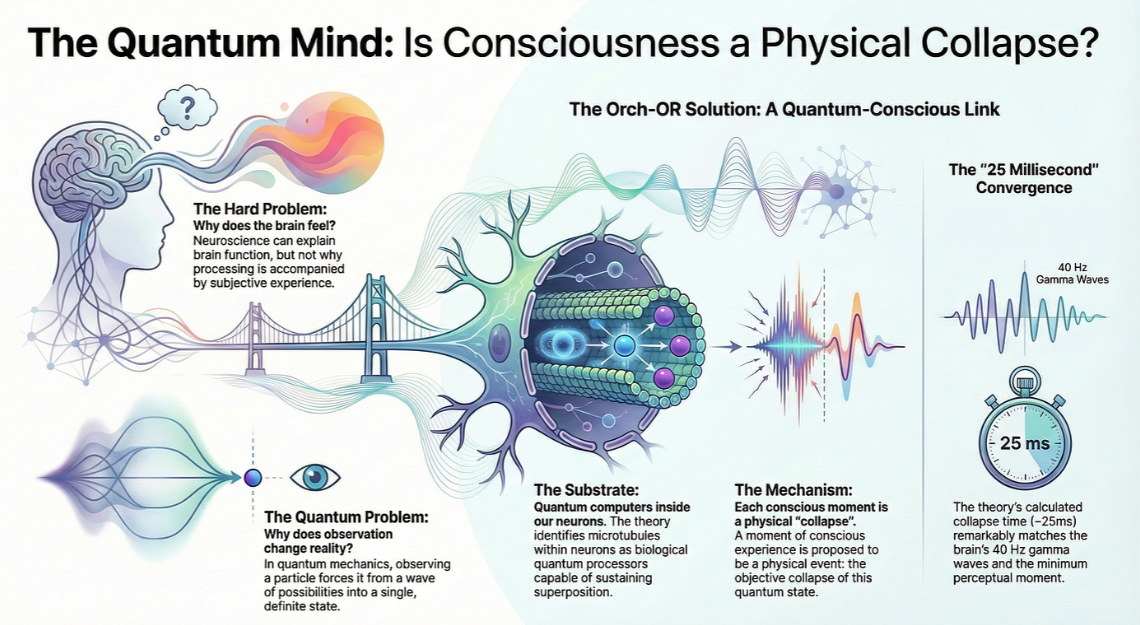
Critics screamed: “The brain is warm and wet! Quantum states die instantly!” But quantum biology fought back—plants use superposition for efficient photosynthesis at room temperature. Recent microtubule experiments hint at super-radiance—collective effects that could protect coherence long enough to matter. If true, consciousness isn’t just in the universe—it’s made of the same stuff that resolves quantum possibilities into reality. And it gets wilder. Quantum entanglement means two particles can be linked so measuring one instantly constrains the other—no matter the distance. Einstein hated it (“spooky action at a distance”), but experiments prove it’s real. The universe isn’t a collection of separate things; it’s a web of instant relationships.
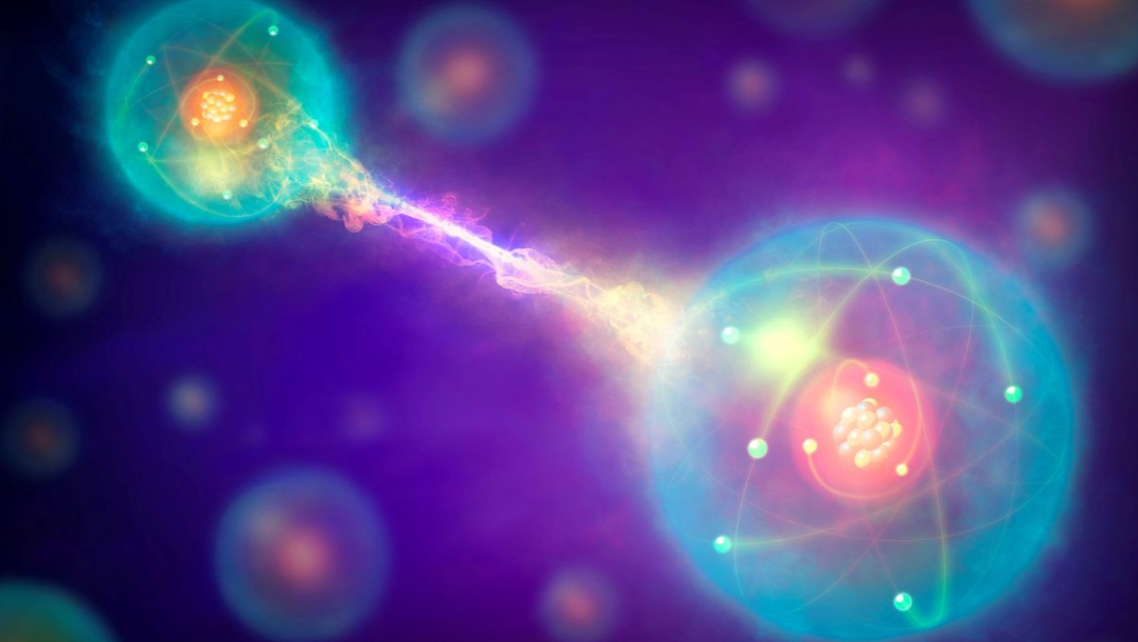
If your brain uses entangled quantum processes across vast networks, consciousness might not be trapped in your skull. It could be non-local—tied into the same relational fabric as everything else. The binding problem (how scattered brain regions feel like one unified “you”) suddenly has a candidate explanation: quantum coherence doesn’t need wires; it just is whole. John Wheeler called this the participatory universe: observers aren’t spectators. They help actualize reality. You’re not watching the movie—you’re co-writing it, frame by quantum frame.
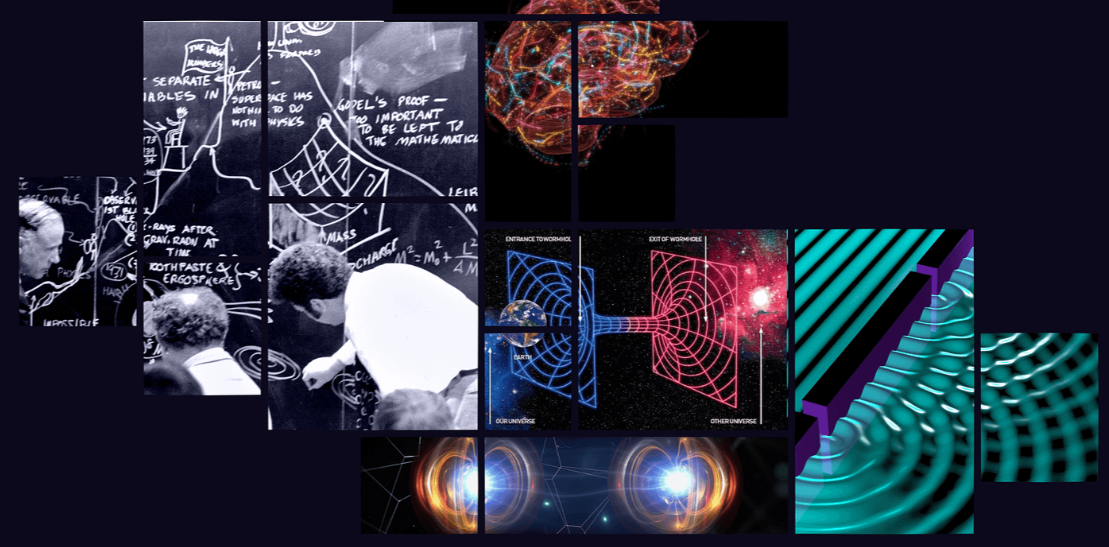
Even wilder alternatives exist: Donald Hoffman says evolution gave us a user interface, not truth—spacetime and objects are like desktop icons hiding conscious agents underneath. Or the Many-Worlds view: no collapse, just endless branching. Every possibility happens. Subjectively, you only ever experience branches where “you” survive—hello, quantum immortality. None of these are proven. Many physicists roll their eyes. Yet they all point to the same seismic shift: the classical story—mind as late-emerging accident in a mechanical cosmos—is crumbling. Quantum mechanics forces us to ask: What if consciousness isn’t a bug in the universe… but one of its core features? The boundary between “you” and “world” is thinner than it feels. Your awareness might be less a private theater and more a node in an immense, relational dance—where observing doesn’t just reveal reality… it helps sculpt it.So next time you catch yourself thinking, really feeling the world… ask: Am I just watching? Or am I, right now, helping the universe decide what it wants to become? The mystery isn’t going away. It’s only getting stranger—and more beautiful.